Before you fall in love with a van on Instagram, before you schedule a factory tour, before you put a deposit down — answer these seven questions. They'll save you from one of the most expensive mistakes you can make.
Question 1: How Do You Actually Plan to Use It?
This sounds obvious. It isn't.
Define Your Use Case Before You Shop
Most buyers say "weekend trips and maybe some longer stuff eventually." That answer tells you nothing — and it leads to buying the wrong van. Be specific. Are you a solo traveler or a couple? Do you bring dogs? Kids? Bikes? Do you need to work remotely from the road? Are you camping in developed campgrounds with hookups, or are you parking on forest roads with no power and no water for a week at a time?
Why Use Case Drives Every Other Decision
Your use case determines your floor plan, your electrical requirements, your storage needs, and your budget. A weekend warrior who camps at state parks twice a month has completely different needs than a couple planning to full-time for two years in the backcountry. Get this wrong and you'll be living with compromises every single trip.
Question 2: Custom Builder or RV Manufacturer?
This is the fork in the road — and it's a bigger decision than most buyers realize.
What the Custom Builder Path Looks Like
Working with a shop like Outside Van, Storyteller Overland, or dozens of regional converters means they take a raw cargo van and build it to your specifications. You get a high degree of personalization, often superior craftsmanship, and a build that reflects how you actually live. The tradeoff is lead times that can stretch 12-18 months, limited dealer networks for service, and prices that reflect handcrafted work.
What the RV Manufacturer Path Looks Like
Buying from companies like Winnebago, Airstream, or Thor means established dealer networks, standardized builds, financing options, and warranty infrastructure. These used to mean compromise on capability. Not anymore.
How the Market Has Changed
Here's what's shifted the game: major manufacturers are now bringing custom builder specs to production scale. Factory all-wheel drive, suspension upgrades, off-road wheel and tire packages — features that used to require a boutique builder are now coming off assembly lines. That blurs the line significantly and makes the decision harder than it used to be. The right answer depends on how much you value personalization versus convenience, and how comfortable you are with the service and warranty experience each path offers.
Question 3: Do You Need 4x4 and Off-Road Capability?
Be honest with yourself here.
The Real Cost of 4x4
4x4 capability adds cost — typically $10,000 to $25,000 or more depending on the platform and conversion. It adds weight. It adds mechanical complexity. And for a lot of buyers, it sits unused 95% of the time.
Who Actually Needs Off-Road Capability
If your version of adventure is driving to a trailhead, parking in a campground, and day hiking — you don't need 4x4. A well-built 2WD Sprinter will get you everywhere you actually want to go. But if you're chasing dispersed camping on unmaintained forest roads, running routes in shoulder season when conditions are unpredictable, or overlanding into genuinely remote terrain — 4x4 stops being a luxury and becomes a safety decision.
Don't Let Marketing Make This Decision
The current market trend is pushing buyers toward off-road specs because it looks great and it sells. Don't let marketing make this decision for you. Be clear about where you actually drive, and buy accordingly. Our full breakdown: is 4x4 actually worth it?
Question 4: Who Converted It and Can They Prove Their Quality?
This is the question most buyers skip. It's the one they regret.
Understanding Converter Quality Tiers
Not all converters are equal — not even close. There are three rough tiers in the market:
- +Premium builders have years of documented builds, real customer reviews, transparent build processes, proper electrical engineering, and warranties they actually stand behind. They cost more because they deliver more.
- +Mid-tier builders are often solid regional shops doing good work, but with less track record and less infrastructure. Some are excellent. Some cut corners you won't discover until you're three states from home.
- +Budget converters — domestic or overseas — often look impressive in photos and fall apart under real use. Poorly designed electrical systems, inadequate insulation, cabinetry that doesn't survive road vibration, and warranties that evaporate when you need them.
Questions to Ask Every Converter Before You Buy
Before you commit, ask for a detailed build sheet. Ask for customer references and actually call them. Ask specifically about the electrical system design and who engineered it. Ask what the warranty covers and what the claims process looks like. A quality builder will answer every one of those questions without hesitation. A bad one will get vague.
Question 5: What's Your Real Budget Including Hidden Costs?
Whatever number you have in your head right now — add 20 to 30 percent.
Hidden Costs Most Buyers Miss
The purchase price is just the beginning. Here's what most buyers don't factor in:
- +Insurance on a $150,000 Class B is not cheap, and coverage varies significantly. Some policies don't cover full-time living situations. Get quotes before you buy, not after.
- +Maintenance on a Mercedes Sprinter is expensive. Dealer networks are improving but service can still be difficult in rural areas. A diesel engine, a complex electrical system, and a living space all require ongoing attention.
- +Storage if you're not full-timing. Climate-controlled storage for a vehicle this size runs $200 to $400 a month in most western markets.
Costs That Catch Buyers Off Guard
Upgrades — almost every buyer adds things after purchase. Solar capacity, better mattress, bike rack, rooftop gear, communication devices for backcountry travel. Budget for it upfront. Depreciation — Class B vans hold value reasonably well compared to larger RVs, but they're not investments. Know your exit strategy before you buy.
Question 6: How Do You Handle Power and Water Off-Grid?
This is where dream meets reality fast.
Understanding Your Electrical System
The electrical system is the heart of a livable van build. It determines whether you can run your coffee maker, charge your laptops, power your refrigerator, and keep your CPAP running for three days without hookups. A poorly designed system will leave you frustrated and underpowered. A well-engineered one disappears into the background and just works.
What to Look for in a Van's Electrical Build
Ask specifically about battery capacity in usable amp hours, solar input wattage, shore power charging capability, and inverter size. Lithium batteries are now the standard for serious builds — they're lighter, they charge faster, and they deliver more usable capacity than AGM. The complete sizing guide: off-grid power systems for Class B vans.
Water Capacity and Real-World Use
Water is simpler but still matters. How many gallons does the fresh tank hold? Is there a gray water tank or does it drain directly? Is there a hot water system? For weekend use these questions are minor. For extended trips they become daily considerations.
Question 7: What Does Ownership Look Like Long Term?
The purchase is day one. You need to think about year three.
Warranty Coverage That Actually Protects You
What's actually covered, for how long, and who honors it? A custom builder warranty is only as good as the builder's longevity and willingness to stand behind their work. A manufacturer warranty comes with dealer network support but may have more exclusions than you expect.
Service Network and Parts Availability
Where do you get it serviced? This matters more if you travel extensively. Sprinter dealers are widespread but not universal. Promaster and Transit have broader domestic dealer coverage. If something fails in rural Montana, your service options matter. For highly custom builds with proprietary components, replacement parts can become a challenge. For production vans from established manufacturers this is largely a non-issue.
Resale Value by Van Type
Class B vans from reputable builders and established manufacturers hold value well. Unknown converters and budget builds do not. If you think you might sell in five years, buy accordingly.
The Bottom Line
A Class B van is one of the best investments you can make in how you experience the world. It's also a decision that rewards research and punishes impulse. Answer these seven questions honestly before you start shopping and you'll enter the market with clarity. You'll know what you need, what you're willing to pay for, and what questions to ask before you sign anything. That puts you miles ahead of most buyers. The right van is out there. Take the time to find it. When you are ready, take the match quiz or compare every current model side by side.
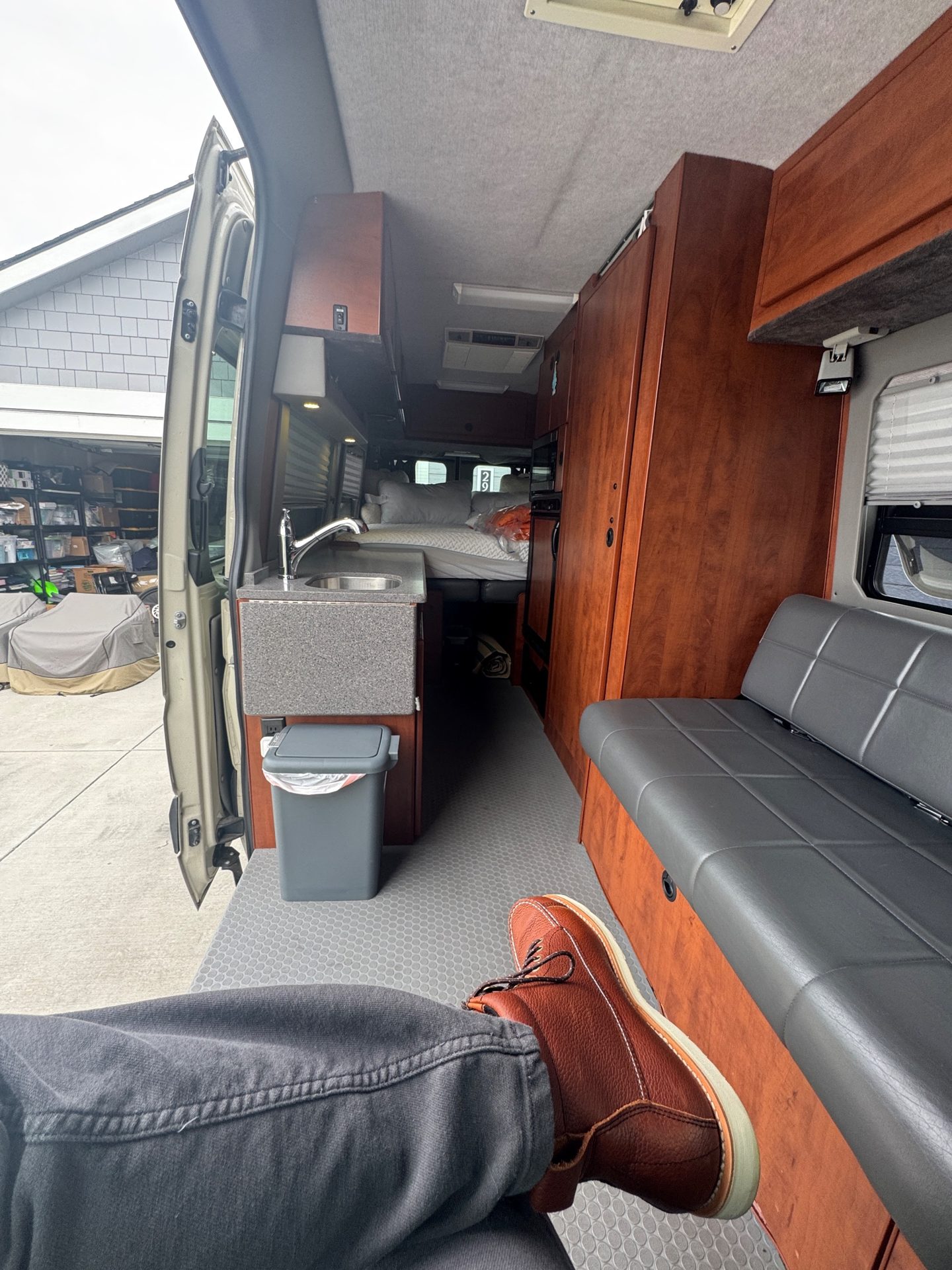
About the Author — Mark Abplanalp lives in Post Falls, Idaho with his wife and their rescue dog Roxy. He owns a 2013 Sportsmobile 170 EXT Sprinter van and has spent years exploring the American West from the driver's seat. He's passionate about the Class B van space and committed to helping buyers navigate it with honest, experience-based guidance — so they buy the right rig the first time.
Frequently Asked Questions
How do I decide how I'll actually use my Class B van?
Be specific about your travel style before you shop. Define whether you're solo or a couple, whether you bring pets or bikes, whether you need to work remotely, and whether you'll camp at developed campgrounds with hookups or boondock on forest roads for a week at a time. Your use case determines your floor plan, electrical requirements, storage needs, and budget.
Should I buy from a custom van builder or an RV manufacturer?
Custom builders like Outside Van or Storyteller Overland offer high personalization and often superior craftsmanship, but with 12-18 month lead times and limited service networks. RV manufacturers like Winnebago, Airstream, and Thor offer established dealer networks, standardized builds, and warranty infrastructure. Major manufacturers now offer factory all-wheel drive and off-road packages that used to require a boutique builder.
Is 4x4 worth the cost on a Class B campervan?
4x4 adds $10,000 to $25,000 or more and increases weight and mechanical complexity. If you camp at developed campgrounds and drive graded roads, you don't need it. If you chase dispersed camping on unmaintained forest roads or overland into remote terrain, 4x4 becomes a safety decision. Don't let marketing make this choice — be honest about where you actually drive.
How do I evaluate a van converter's build quality?
Ask for a detailed build sheet, customer references (and actually call them), specifics about the electrical system design and who engineered it, and exactly what the warranty covers including the claims process. Premium builders answer these questions without hesitation. There are three quality tiers: premium builders with documented track records, mid-tier regional shops with varying quality, and budget converters that often look great in photos but fall apart under real use.
What hidden costs should I budget for when buying a Class B van?
Add 20-30% to your purchase price for hidden costs. Insurance on a $150,000 Class B varies significantly and some policies don't cover full-time living. Mercedes Sprinter maintenance is expensive and service can be difficult in rural areas. Storage runs $200-$400/month if you're not full-timing. Almost every buyer adds upgrades after purchase — solar, mattress, bike rack, communication devices. Class B vans hold value better than larger RVs, but they're not investments.
What should I look for in a van's off-grid power and water system?
The electrical system determines whether you can run appliances for days without hookups. Ask about battery capacity in usable amp hours, solar input wattage, shore power charging capability, and inverter size. Lithium batteries are now the standard for serious builds. For water, check fresh tank capacity, gray water handling, and hot water availability — these matter more on extended trips than weekend use.
What does long-term Class B van ownership look like?
Think about year three, not just day one. Evaluate warranty coverage and who actually honors it — custom builder warranties depend on the builder's longevity. Consider the service network: Sprinter dealers are widespread but not universal, while Promaster and Transit have broader domestic coverage. Vans from reputable builders and established manufacturers hold resale value well; unknown converters and budget builds do not.